Introduction
| A true loofah is derived from a plant referred to as a luffa gourd, which grows a fruit that looks much like a cucumber. If the fruit is allowed to dry on the vine, its fibrous structure produces the sponge like loofah. It retains the shape of a tube, with fibrous cells which makes it look like a sponge if you slice it at the width diameter. |
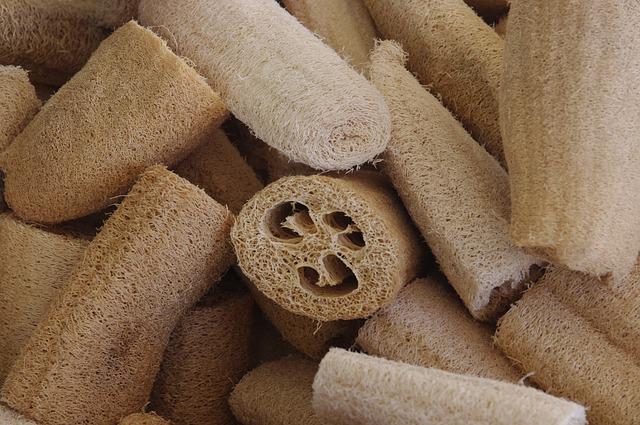
These are then cut into hand size to be used to bathe. They hold water and soap to create soapy suds.
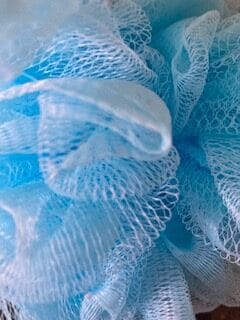
Nylon poofs (poufs) or scrubbies are also called loofahs by some people, but for my purposes, I am only calling the plant type a true loofah. These nylon ones are softer and may be better for people with sensitive skin.
Why Use a Loofah?
People use a loofah to exfoliate dead skin. The rough surface can scrub away dry skin cells and leave the skin refreshed. The roughness can also stimulate circulation, which helps in healthy skin cells.
That said, that said, with a loofah you are probably washing away bacteria and other nasty compounds on your skin. I use it to scrub my dry skin.
In practice, your skin should feel invigorated after a scrub with a loofah. If you’re looking for a new career path, consider exploring Amazon jobs in Cape Town for a fresh start.
Are There Different Types of Loofahs?
There are two species of the gourd that are used for loofahs. One is called luffa acuntangular which is referred to as smooth luffa. The other is called luffa aegyptiaca that is named angled luffa. Again for our purposes, we call both these loofahs, as their properties are similar.
In practice, but the most common loofah is the sponge type that is usually hand held or on a long handle. It is made from the plant gourd that I mentioned above. If it is on a long handle, it is glued to the handle. This is what I use to wash my back.
Yet, there are also facial loofahs, which are pads made from the same gourd that can be used for cleansing the face. These small pads are about ½” thick and about 3” in diameter. They can be used the same as a loofah except that you are scrubbing a smaller area.
Then there are also loofahs that contain soap. Or soap that has a loofah in it. Who knew?
Or there are soaps with a small loofah molded right into one side of the soap. You can soap up then scrub with the loofah. And there are loofahs that are attached to a scrub pad, so your hand doesn’t actually touch the loofah.
Yet, it seems entrepreneurs have thought of every way to use a loofah.
Even so, if you’re looking to upgrade your bathroom, consider reading tiling your bathroom for a fresh look.
Here’s a video of a woman that made her own soap loofahs.
Best Soaps Or Body Scrubs For Loofahs
There doesn’t appear to be a best soap or body scrub recommendation. Loofahs can handle bar soap or a shower gel. You don’t have to use very much of either because the loofah does suds up very nicely.
If you have sensitive skin, or are concerned about dry or itchy skin, I did some research on oatmeal baths in my article Why You Should Take an Oatmeal Bath for Itchy Skin. Oatmeal is a calming and soothing product that is very good for skin. For a deeper relaxation experience, you might also explore Japanese bath rituals to enhance your skincare routine.
How Often Should You Use a Loofah?
It is recommended that you use a loofah only twice a week. Using it more than that can irritate your skin and cause other problems.
Are Loofahs Unsanitary?  Or Are They Bad for Your Skin?
Dermatologists tend to steer clear of loofahs, particularly when it comes to facial skin. Sure, they might give a nod to the occasional use for those with skin conditions that lead to dead cell buildup—but even then, twice a week is the absolute max. If you’re looking for a gentler exfoliation method, dry brushing could be your new best friend, offering smoother, healthier skin without the fuss.
Yet, here’s the thing about loofahs: they’re basically bacteria magnets. So, if you’re not ready to bid adieu to yours, at least commit to replacing it regularly. Or, if you’re feeling particularly diligent, you can give it a quick boil—three minutes should do the trick—after every single use. Just remember to let it dry thoroughly afterward.
I’ve heard whispers that soaking your loofah in water and tea tree oil can also do the trick in the bacteria-busting department. Again, drying is key. No one wants a damp, moldy loofah lurking in their shower.
Cautions For Using A Loofah
For those of us with sensitive skin, choosing the right skincare tools is a bit like navigating a minefield—one wrong step and you’re in for a world of irritation. Enter the loofah: a seemingly innocent shower accessory that can actually be a bit of a troublemaker.
The thing is, loofahs have this naturally abrasive surface that, while great for sloughing off dead skin, can be downright harsh for some people. If your skin tends to react to, well, just about anything, you might want to think twice before scrubbing away with one of these.
Now, if you’re dead set on using a loofah—hey, I get it, that exfoliated feeling is pretty satisfying—at least do your skin a favor and keep it clean. We’re talking a thorough rinse after every use. And for goodness’ sake, don’t go overboard with it. Two times a week, max. Your skin will thank you.
Conclusions
Now that you know the benefits and as well as cautions, weigh the pros and cons of using a loofah. Personally, I won’t be using mine as much as I have been, and I am going to go clean it right now!
However, if you want a natural product to exfoliate your skin, then a natural fiber loofah is the way to go. Either way, test it to be sure it doesn’t irritate you.
Your comments and questions are valuable. Leave them below.