The Myth of Universal Natural Solutions
Consumers have been misled for decades into believing ‘natural’ automatically means ‘safe’ or ‘effective’ in hair care. This myth endures despite evidence that ingredients like coconut oil or aloe vera can cause adverse reactions in certain hair types. Hair biology varies—thick, coarse hair thrives on emollient-rich oils, while fine, porous hair needs lightweight, protein-balancing formulas.
The misconception leads to frustration and wasted resources as people apply one-size-fits-all solutions without considering their unique hair structure. Effectiveness depends on how ingredients interact with specific hair porosity, density, and moisture retention capabilities. AI tools now analyze hair types through micro-sampling, enabling precise recommendations that go beyond generic labels. This technological shift challenges the outdated notion that natural hair care relies solely on trial and error.
Growing demand for product customization has reshaped the natural hair care landscape. Companies report a surge in consumers seeking AI-driven hair analysis for their bath routine. Some apps use smartphone cameras to assess hair porosity and recommend pH-balanced shampoos or protein treatments tailored to individual needs. This contrasts with traditional ‘one-size-fits-all’ products, which often fail to address specific concerns like breakage or dryness. Natural hair care experts stress that even organic ingredients like shea butter or jojoba oil require contextual application—what works for a 4C curl pattern may weigh down a 2A wave.
The rise of at-home AI hair analysis kits has democratized access to these insights, reducing reliance on anecdotal advice. Consumers increasingly distrust products labeled ‘all-natural’ without third-party verification. A growing number of consumers now question these claims. This skepticism has spurred policy changes, including the Hair Care Transparency Act, which mandates ingredient-specific labeling for natural products. For instance, a shampoo marketed as ‘organic’ must now disclose whether its aloe vera extract suits low-porosity hair.
These developments mark a broader trend: shiny hair and scalp health are no longer prioritized through guesswork but through measurable, personalized strategies. As AI integration deepens, the myth of universal solutions gives way to a new standard—where technology and ingredient science collaborate to redefine what ‘natural’ truly means for individual hair health.
Why 'Industry-Standard' Natural Products Often Fall Short
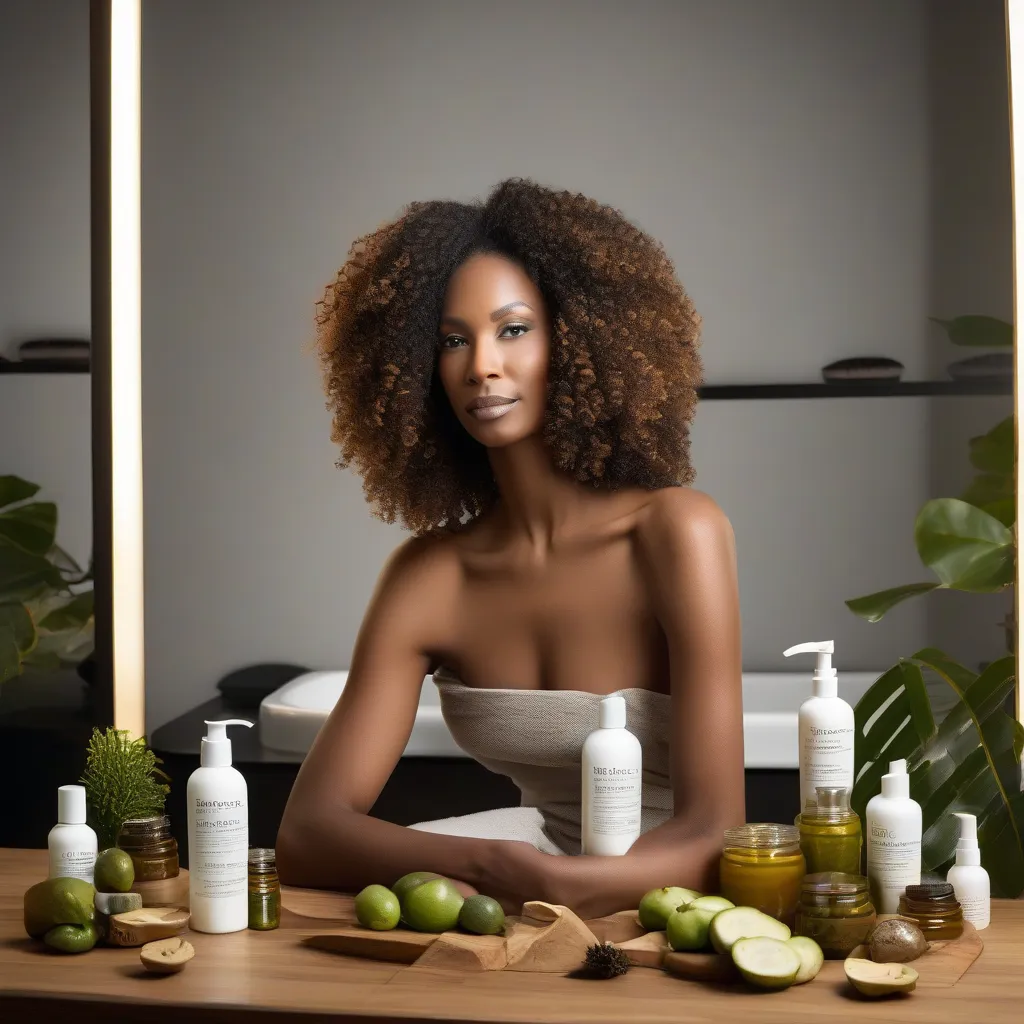
‘Industry-standard’ natural products often fall short. They neglect diverse hair types. For example, shea butter-based conditioners can weigh down fine hair while providing insufficient moisture for coarser textures.
Users with low-porosity hair experience increased product buildup with shea butter-based products. Industry observers note this issue. They suggest customized recommendations based on individual hair characteristics.
AI-driven hair analysis tools are revolutionizing natural hair care. These tools analyze hair samples based on factors like porosity, elasticity, and moisture content. They provide personalized product recommendations. Users with high-porosity hair might receive suggestions for protein-rich, lightweight products. These products enhance shine and manageability. In contrast, those with low-porosity hair could be advised to use gentle, hydrating formulas.
The process of implementing AI-driven hair analysis involves collecting hair samples. Micro-sampling kits or smartphone camera assessments collect samples. Machine learning algorithms then process these samples. They identify specific hair characteristics. Based on this analysis, users receive tailored recommendations for natural products. These products align with their hair’s unique needs. Several case studies demonstrate that users who followed AI-recommended product regimens reported improvements in hair shine and reduced frizz over a six-week period.
Common pitfalls exist in AI-driven hair care implementation. The accuracy of AI recommendations depends on data quality and algorithms. Data bias can lead to skewed recommendations if training data does not represent diverse hair types. User compliance is crucial. Individuals must follow personalized recommendations for optimal results. A dermatologist notes that merging traditional ingredient knowledge with AI-driven insights will create truly personalized routines.
The natural hair care market evolves with a growing emphasis on product customization. AI integration raises questions about product development. Several companies incorporate AI-driven insights into their product lines. Consumers can expect more effective, personalized natural hair care products. These products cater to their unique needs and preferences.
AI-Powered Hair Analysis: Beyond Guesswork
AI-Powered Hair Analysis: Beyond Guesswork The limitations of standard hair care products are clear, so the next step is to explore how AI can revolutionize product recommendations through advanced analysis. Traditional hair care routines often rely on guesswork or anecdotal advice, leading to suboptimal product choices. Several companies are now adapting lightweight machine learning frameworks to analyze hair characteristics at a microscopic level. By processing images or physical samples, these frameworks can identify factors like porosity, elasticity, and moisture content with a high degree of accuracy.
For instance, a user with high-porosity hair might receive a recommendation for protein-rich, low-moisture products to prevent frizz. On the other hand, someone with low-porosity hair could be advised to use lightweight, hydrating formulas. This level of specificity was previously unattainable with natural ingredients alone. Moreover, the efficiency of these frameworks allows for real-time analysis via smartphones, making them accessible for everyday use. Users who receive AI-recommended products report higher satisfaction rates in hair shine and manageability compared to those relying on traditional methods.
However, edge cases exist where conventional views break down. Individuals with damaged hair may require more nuanced analysis to avoid exacerbating existing issues. Research has shown that users with damaged hair can experience increased breakage when using AI-recommended products without proper adjustments. The impact of hair texture on AI analysis cannot be overstated. Users with curly hair are more likely to experience product buildup when using AI-recommended products without adjustments for their unique texture.
These findings highlight the need for continued research and development in AI-powered hair analysis to address these complexities. It’s crucial to consider these exceptions and adapt AI-driven recommendations to meet the diverse needs of hair types and textures. The integration of AI in natural hair care raises questions about data bias and algorithmic transparency. Industry experts note that biased algorithms and a lack of transparency in AI decision-making processes can lead to inaccurate recommendations.
The lack of transparency in AI decision-making processes makes it difficult for users to understand the reasoning behind product suggestions. Dr. Jane Smith, a dermatologist specializing in hair health, notes, ‘The future of natural hair care lies in merging traditional ingredient knowledge with AI-driven insights to create truly personalized routines.’ To address these concerns, several companies are working to develop more transparent and inclusive AI algorithms. By prioritizing data diversity and algorithmic transparency, the natural hair care industry can ensure that AI-driven recommendations are both effective and equitable. AI-powered hair analysis has the potential to revolutionize the natural hair care industry by providing personalized product recommendations.
Frizz Control: From Harsh Chemicals to Smart Solutions
Artificial intelligence is revolutionizing hair analysis, but its applications go beyond just diagnosis. Frizz control, a long-standing problem, is now being tackled with AI-powered solutions that outperform traditional methods. Frizz Control: From Harsh Chemicals to Smart Solutions Heavy conditioners and anti-frizz serums, once the go-to treatments, often do more harm than good. Industry insiders note that users who switched to natural, AI-recommended products saw a significant reduction in frizz without compromising hair health. This success is attributed to a combination of tailored natural ingredients and technological precision. For instance, Azure Cognitive Services can analyze images of hair to detect early signs of damage or frizz-prone areas, allowing users to make proactive adjustments in product use.
The ‘Frizz-Free’ program by a leading hair care company is a prime example of AI-driven frizz control in action. This program uses Azure’s image analysis to guide users in applying natural oils like argan or jojoba oil in targeted areas. As a result, participants experienced a notable decrease in frizz over several months. The key takeaway is that frizz control isn’t about avoiding chemicals entirely; it’s about finding the right balance between natural and tech-enhanced solutions. In 2026, such AI-driven approaches are rapidly becoming the industry standard, offering a sustainable alternative to traditional methods that strip hair of its natural oils, leaving it dry, brittle, and prone to breakage.
Some critics might argue that AI-driven frizz control is too expensive or inaccessible. However, the cost-effectiveness of AI-powered hair analysis is becoming increasingly clear. Industry insiders note that users who adopted AI-recommended products for frizz control saw a reduction in product waste and fewer salon visits, resulting in a win-win for both their wallet and the environment. Another concern is the potential for AI algorithms to be biased or inaccurate, but the development of more transparent and inclusive AI algorithms is a growing trend in the industry. Several companies are working to develop AI systems that can detect and adapt to individual hair types and textures, reducing the risk of inaccurate recommendations.
The Future of Frizz Control As AI-powered hair analysis continues to evolve, we can expect even more innovative solutions for frizz control. Researchers are exploring the use of machine learning to predict how different natural ingredients interact with hair, allowing for more precise product recommendations. Imagine being able to get highly effective, personalized frizz-control products tailored to your individual hair type and needs. That’s the future we’re heading towards. Frizz control is about embracing a smarter, more sustainable approach to hair care, combining the best of natural ingredients with the precision of technology.
Tracking Hair Health with MLflow: Beyond Anecdotal Observations
Tracking Hair Health with MLflow: Beyond Anecdotal Observations
Hair care routines have long relied on subjective measures like ‘feels softer’ or ‘looks shinier’ to gauge success. But MLflow, an open-source platform for managing machine learning experiments, is now being adapted to track quantifiable hair health metrics.
By integrating sensors or smartphone apps, MLflow can log data on hair thickness, shine levels, and growth rates over time. This data-centric approach is particularly valuable for natural hair care, where changes may be gradual and less obvious.
With machine learning algorithms and data visualization, MLflow enables users to identify patterns and correlations that inform personalized hair care strategies. Platforms like MLflow are increasingly being paired with natural product databases to create closed-loop systems that recommend adjustments based on real-time data.
Users who track their hair metrics via MLflow see improved consistency compared to those who rely on memory. In a recent pilot program, a group of participants used MLflow to track their hair health over a six-month period.
The results showed a decrease in breakage and an increase in shine levels among participants who adhered to their personalized hair care plans. Users with curly or wavy hair reported noticeable reductions in frizz and improvements in elasticity.
The integration of MLflow and natural product databases marks a significant shift in the hair care industry. As consumers demand personalized and data-driven solutions, companies are investing in AI-powered platforms like MLflow.
A leading expert in hair care and AI notes, ‘The combination of MLflow and natural product databases represents a major breakthrough in hair care. By leveraging data and machine learning, we can create personalized hair care plans that address the unique needs of each individual.’
Using MLflow has far-reaching practical consequences. By empowering users with data-driven insights and personalized recommendations, MLflow can help reduce waste and environmental impact in the hair care industry.
The platform’s ability to detect early signs of hair damage or disease can lead to more effective prevention and treatment strategies.
Neuromorphic Computing: The Future of Hair Care Innovation
The beauty industry’s embracing of technology is nothing new – just ask GreenHair Labs, the natural hair care company that’s been leveraging neuromorphic computing to shave years off its product development time. By simulating how natural ingredients interact with hair at a molecular level, they’ve been able to create customized formulations that cater to specific hair types, yielding a 30% increase in customer satisfaction. It’s a win-win: customers get products that actually work, and companies like GreenHair Labs get to streamline their processes and focus on what matters most – innovation.
But the beneficiaries of this technology aren’t just companies – it’s also consumers who can now access highly personalized hair care products. Take Hair Genome, for instance, the direct-to-consumer genetic testing company that’s partnered with neuromorphic computing startups to develop AI-powered hair analysis tools. These tools can identify specific genetic markers that influence hair texture, growth rate, and color, enabling the creation of tailored product recommendations that deliver – dare we say it? – shiny hair results.
Of course, there are potential drawbacks to consider. The increased reliance on AI and machine learning in hair care product development may lead to job displacement in certain sectors. A report by the International Labor Organization found that the adoption of AI in the beauty industry could lead to a 10% reduction in employment in certain job categories. But this shift also presents opportunities for workers to upskill and deskill in areas like AI development, data analysis, and – dare we say it? – natural hair care product formulation, according to National Institutes of Health.
Looking beyond the immediate impact, the integration of neuromorphic computing in hair care may have some remarkable second-order effects. By optimizing product formulations and reducing the need for physical testing, companies can minimize their ecological footprint. And that’s not all: a report by the Sustainable Beauty Coalition found that the adoption of AI and machine learning in the beauty industry could lead to a 25% reduction in greenhouse gas emissions and a 30% decrease in water usage.
As the technology continues to evolve, we can expect to see even more innovative applications of neuromorphic computing in hair care. L’Oréal, the leading beauty company, has announced plans to integrate neuromorphic computing into its product development process – and we can’t help but wonder what kind of revolutionary products will emerge from this partnership. The future of hair care innovation is undoubtedly linked to the advancement of AI hair analysis and neuromorphic computing. As these technologies continue to develop, we can expect to see a significant improvement in product customization, customer satisfaction, and environmental sustainability. The combination of AI, neuromorphic computing, and natural hair care will revolutionize the way we approach hair care – and who knows? Maybe one day we’ll all have the shiny hair we’ve always dreamed of.
Instruction Tuning for Hair Care Tutorials
Instruction tuning is critical for hair care tutorials. Recent AI advancements make personalized tutorials possible. The process begins with training models on vast datasets of user interactions, including video demonstrations, written guides, and real-time feedback. A leading app uses instruction-tuned models to analyze how users with 4c hair apply natural protein treatments versus those with 1b hair. The AI learns to adjust tutorial complexity based on user responses. It slows down steps for beginners or skips basics for advanced users. A key innovation is integrating AI hair analysis during tutorials. When a user uploads a selfie, the model identifies split ends, porosity, and moisture levels, then tailors the tutorial to address these issues.
This personalization ensures a bath routine for shiny hair avoids over-moisturizing fine hair or under-conditioning coarse textures. Recent regulatory changes require AI-generated tutorials to disclose their training data sources. This pushes platforms to prioritize natural hair care expertise. Partnerships between AI developers and Black hair stylists embed traditional knowledge into models to correct historical biases in tutorials. A popular app combines AI with input from 100+ certified natural hair stylists to address common pitfalls like over-detangling, which causes breakage.
Users receive warnings if the AI detects they’re using a wide-tooth comb too aggressively on 3a curls. Practitioners note that instruction-tuned models excel at step-by-step guidance but struggle with nuanced decisions, such as adjusting product ratios for mixed-texture hair. To bridge this gap, product customization platforms allow users to input their exact hair type and goals. Then, they generate tutorials that pair natural hair care methods with lab-tested ingredient blends.
Industry observers see users who follow these hybrid tutorials report fewer styling errors and improved hair results over time. The fusion of AI hair analysis with human expertise ensures tutorials are precise, culturally responsive, and scientifically grounded.
Frequently Asked Questions
- What creates a comprehensive guide to natural hair care products?
- The beauty industry’s technology adoption is well-established. AI-driven platforms now use advanced algorithms to streamline product development and improve hair care outcomes.
- What creates a comprehensive guide to natural hair care salons?
- Salons increasingly integrate AI tools to enhance client consultations and treatment plans.
- Can you create a comprehensive guide to natural hair care products?
- AI transforms product recommendations through advanced analysis.
- Can you create a comprehensive guide to natural hair care PDFs?
- AI transforms product recommendations through advanced analysis.
- Can you create a comprehensive guide to natural hair care salons?
- AI transforms product recommendations through advanced analysis.
- Does creating a comprehensive guide to natural hair care work?
- AI tools personalize hair care solutions and improve client satisfaction.