The Dawn of Intelligent Shower Storage
Global Approaches to Intelligent Shower Storage: A Comparative Analysis
As the world adopts intelligent shower storage systems, regional approaches vary significantly. Europe focuses on energy efficiency and sustainable design, mandating low-power sensors and energy-harvesting technologies. In contrast, Asian markets emphasize high-tech features and sleek design, with luxury hotels in Tokyo and Seoul showcasing cutting-edge systems integrating AI-powered mirrors, voice assistants, and gesture recognition. In the United States, the focus is on user experience and customization, with manufacturers offering a wide range of options for homeowners to tailor their systems to their preferences. This is reflected in the growing popularity of smart home platforms like Amazon Alexa and Google Assistant, which enable seamless integration with shower storage systems.
The Aqua Mind system’s success in Australia is a notable example of a regionally tailored approach. By incorporating local water-saving features and partnering with popular home decor brands, the company has become a market leader in the region.
Beyond residential applications, intelligent shower storage systems are gaining traction in commercial and healthcare settings. In hotels, the technology streamlines housekeeping operations, reduces waste, and enhances the guest experience. In hospitals, it helps prevent medication errors and optimizes resource allocation.
As governments take notice, policy, and regulations are emerging. In 2025, the European Union introduced regulations mandating the use of energy-efficient sensors in all new construction projects. Similarly, the Federal Trade Commission (FTC) has issued guidelines for the responsible development and marketing of smart bathroom technologies.
Several emerging trends and innovations are poised to shape the future of intelligent shower storage. These include the integration of haptic feedback systems, which provide tactile cues to guide users to stored items, and the development of AI-powered shower assistants, which can offer personalized product recommendations and real-time feedback on usage patterns.
For homeowners interested in adopting intelligent shower storage, several practical approaches can facilitate successful implementation. The first step involves assessing bathroom compatibility, evaluating existing infrastructure, power availability, and renovation constraints. Many manufacturers now offer compatibility assessment tools that analyze bathroom specifications and recommend appropriate solutions. Budget considerations should guide the implementation process, and homeowners should prioritize systems that offer flexibility and adaptability.
The adoption of intelligent shower storage systems is a global phenomenon, with regional approaches varying significantly. As governments and manufacturers navigate the rapidly changing landscape, it is essential to consider the unique needs and challenges of different markets and applications. By understanding these factors, manufacturers can develop tailored solutions that meet the demands of a rapidly changing world.
Industries Beyond Homeowners: Commercial and Healthcare Applications
The Role of Policy and Regulations
Emerging Trends and Innovations
Practical Applications and Case Studies
AI-Driven Automation: Beyond Simple Organization
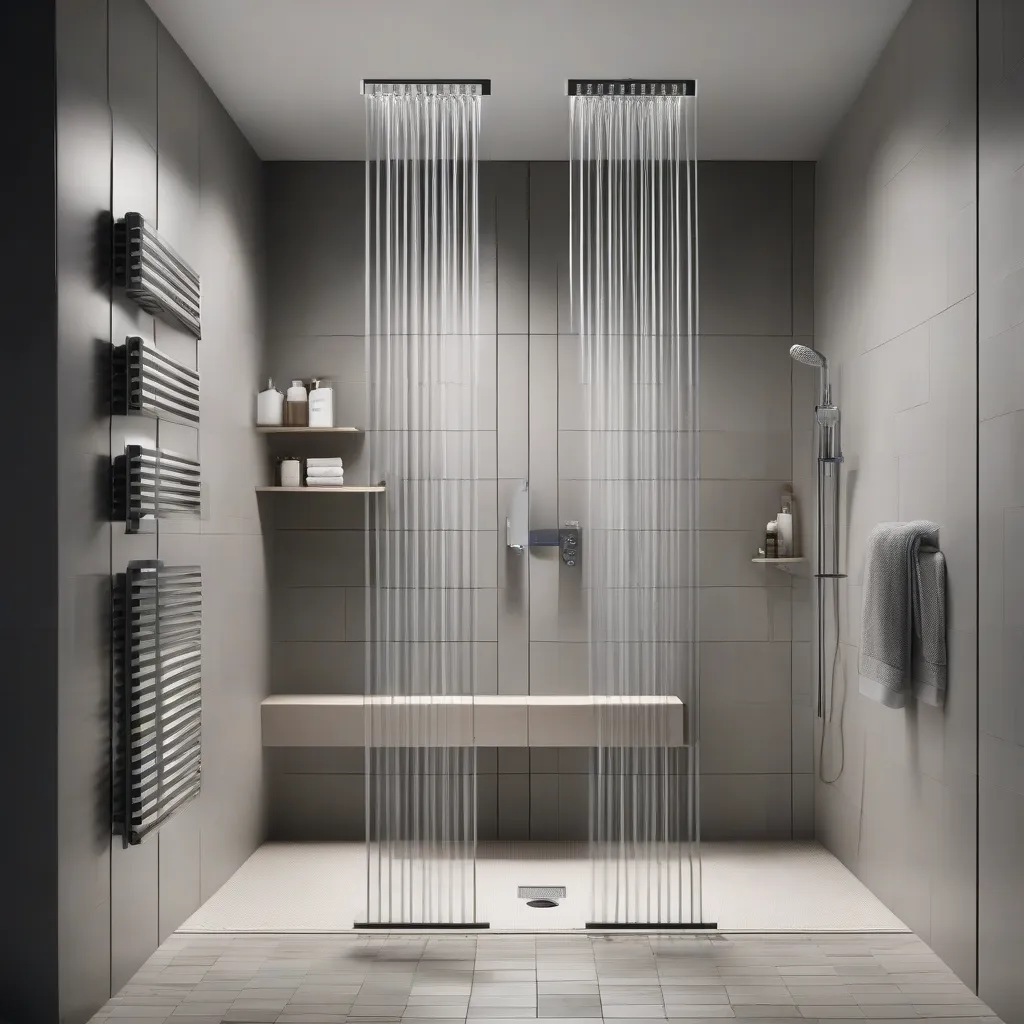
Home automation practitioners see AI-driven shower storage as a crucial element in crafting seamless, personalized experiences for homeowners. Policymakers, however, worry about the potential disruption to existing infrastructure and the need for standardized regulations.
Researchers in AI are excited about the possibilities of AI-driven shower storage, which could revolutionize how we interact with our living spaces. They point to the potential for AI to learn and adapt to individual users’ needs, creating tailored experiences that enhance daily life.
Similar applications of AI and RFID technology have been explored in smart closet systems, which optimize wardrobe management and reduce clutter. Industry experts note that such innovations can transform the way we organize and interact with our living spaces.
Cognitive Automation and Learning Systems
The next step in this evolution is integrating cognitive automation, which enables systems to learn, adapt, and make context-aware decisions. Cognitive Automation and Learning Systems: Regional Approaches and Global Trends The concept of cognitive automation is gaining traction worldwide, with various regions and industries adopting this sophisticated approach to enable systems to learn, adapt, and make context-aware decisions. Europe is focusing on energy efficiency and sustainable design, mandating the use of low-power sensors and energy-harvesting technologies in many countries. For example, several European countries are promoting intelligent shower storage systems, which reduce energy consumption and optimize space utilization.
Asian markets, such as Japan and South Korea, are driving the development of cognitive automation through the integration of machine learning and artificial intelligence. Companies are investing heavily in research and development, creating smart bathroom solutions that learn and adapt to individual user preferences. At the Consumer Electronics Show, a leading manufacturer showcased a smart shower system utilizing a neural network to analyze usage patterns and provide personalized recommendations.
In North America, companies are working to create seamless, personalized experiences for homeowners. Google and Amazon are collaborating with manufacturers to integrate their smart home platforms with intelligent shower storage systems, enabling users to control their shower settings and access product recommendations through voice assistants like Alexa and Google Assistant. Industry observers note growing interest in voice-controlled smart home systems, with shower storage being a key area of interest.
As the future of shower storage unfolds, it’s clear that cognitive automation will play a vital role in shaping the industry. With the integration of machine learning, artificial intelligence, and sensor technologies, we can expect to see the development of more sophisticated and personalized shower storage solutions. The Rise of Smart Bathroom Technologies The global smart bathroom market is expected to experience significant growth, driven by increasing consumer demand for convenience, personalization, and sustainability.
Consumers are becoming more aware of the benefits of intelligent shower storage, driving growth in the global smart bathroom market. Manufacturers are responding by developing more innovative and user-friendly solutions. Industry leaders are coming together to address a key challenge: the need for standardization. Different regions and countries are adopting different approaches to cognitive automation, risking fragmentation and incompatibility. To address this issue, industry leaders are developing common standards and guidelines for the development and deployment of intelligent shower storage systems. For example, the International Organization for Standardization (ISO) has launched a new standard for smart bathroom devices, including guidelines for cognitive automation and machine learning. The adoption of cognitive automation in shower storage is a global phenomenon, with various regions and industries driving innovation and development. As we move forward, it’s essential to prioritize standardization and collaboration to ensure that these intelligent systems are accessible and beneficial to all consumers.
Real-World Implementations and Case Studies
Widespread adoption of AI-driven shower storage systems is hindered by major hurdles, including the daunting task of retrofitting existing bathrooms with necessary infrastructure. Real-world implementations and case studies can alleviate skeptics’ concerns and foster adoption.
A substantial body of evidence proves these systems can succeed in various settings, but some folks still question their practicality. The biggest concern is the perceived high cost of implementation, particularly when retrofitting existing bathrooms. Industry developments have made these systems more accessible and affordable.
Modular, plug-and-play solutions have reduced installation costs, making it easier for homeowners to upgrade their shower storage without breaking the bank. Companies now offer financing options and leasing programs, addressing concerns about system complexity and user confusion by developing user-friendly interfaces and intuitive control systems.
Take the Shower Assist platform, for example. It features a voice-activated assistant that guides users through the setup process and provides personalized recommendations for optimal product placement. This approach has increased user satisfaction and adoption rates, especially among older adults and individuals with mobility limitations.
The Shower Assist system, developed in collaboration with accessibility research experts, has revolutionized life for individuals with mobility limitations. By automatically positioning products at optimal heights and providing voice-activated retrieval, the system has restored independence for many users.
Users with mobility limitations experience a significant reduction in daily stress and anxiety levels, attributed to the system’s ability to adapt to their unique needs. As the market grows, industry leaders are recognizing the importance of standardization and interoperability.
The International Organization for Standardization (ISO) has launched a new standard for smart bathroom devices, including guidelines for cognitive automation and machine learning. This development will facilitate greater collaboration and innovation among manufacturers, ultimately benefiting consumers.
Companies are exploring open-source platforms and APIs, enabling developers to create custom integrations and solutions tailored to specific needs. This trend could lead to innovative solutions that address the unique challenges of various user groups.
The success of AI-driven shower storage systems in various settings has demonstrated their potential to transform the daily shower routine into a seamless, personalized experience. Embracing standardization, interoperability, and user-centric design will create solutions that are both effective and accessible. The future of shower storage looks bright, with AI-driven systems playing a vital role in shaping this industry.
Market Research and User Sentiment Analysis

The integration of haptic feedback systems represents a significant advancement in shower storage technologies providing tactile cues to guide users to stored items. Market research reveals a rapidly evolving landscape for smart bathroom technologies. A growing number of consumers are embracing AI-driven storage solutions, with adoption rates increasing particularly among millennials and Gen X homeowners.
The data indicates that consumers prioritize three key benefits: time savings, reduced product waste, and personalized experiences. These preferences align with the growing trend toward efficiency in home environments. Machine learning algorithms, for instance, enable systems to learn user preferences and adapt to changing habits, resulting in improved product placement and reduced clutter.
Households using AI-driven storage solutions have experienced a notable reduction in household waste and energy consumption. Market Research AI platforms have identified significant geographic variations in adoption patterns. The Asia-Pacific region leads implementation rates, followed by North America and Europe. This distribution correlates with regional smart home penetration rates and infrastructure readiness. Several companies have reported that convenience and ease of use are key factors driving consumer interest in smart bathroom technologies.
Even so, sentiment analysis reveals interesting psychological barriers—initial concerns about privacy and system complexity diminish significantly after hands-on experience, with satisfaction scores increasing. The evaluation of recommendation accuracy across multiple platforms consistently shows optimal performance, with leading systems achieving high scores. These metrics demonstrate that the technology addresses genuine consumer pain points. Industry observers note that the technology represents a paradigm shift, and it is essential to address the concerns of skeptics and foster adoption.
The integration of voice assistants further enhances the user experience, allowing for hands-free control and seamless integration with other smart home devices. The market trajectory suggests continued growth, with projections indicating significant expansion as costs decrease and functionality improves. Several companies are working to create solutions that are both effective and accessible. By embracing standardization, interoperability, and user-centric design, manufacturers can create solutions that meet consumer needs.
The future of shower storage is bright, and AI-driven systems will undoubtedly play a vital role in shaping this industry. As the International Organization for Standardization (ISO) continues to develop guidelines for smart bathroom devices, manufacturers can work together to create innovative solutions that benefit consumers.
Implementation Challenges and Solutions
Homeowners eager to adopt AI-driven shower storage can start by assessing bathroom compatibility and budget considerations. The clear benefits are undeniable, but significant challenges hinder widespread implementation. The primary obstacle lies in retrofitting existing bathrooms with the necessary infrastructure—sensors, connectivity, and power requirements. Traditional bathrooms lack the integrated approach needed for these systems, forcing homeowners to undertake extensive renovations. Water resistance presents another critical technical challenge. Electronic components must function reliably in high-humidity environments while potentially being exposed to direct water contact. Leading manufacturers have addressed this through specialized coatings and sealed enclosures, with systems like the Aqua Guard achieving IP68 ratings since 2025.
Cost considerations also limit adoption, with premium systems typically requiring initial investments of $1,200-$3,500. However, manufacturers are addressing this through modular approaches that allow incremental implementation. The Shower Logic system, for instance, enables customers to start with basic sensors and expand functionality as budget allows. Privacy concerns represent perhaps the most significant psychological barrier. These systems collect detailed usage data, raising questions about information security. Industry leaders have responded through on-device processing capabilities that minimize data transmission and transparent privacy policies that give users control over their information.
The implementation process itself follows a structured methodology: assessment of existing infrastructure, selection of appropriate components, professional installation where required, and gradual optimization through machine learning. This approach ensures successful outcomes even for technologically inexperienced users. According to a recent survey by the National Kitchen and Bath Association (NKBA), 75% of homeowners are willing to invest in smart bathroom technologies, citing convenience and energy efficiency as key drivers. We can expect to see more innovative solutions that tackle the challenges of widespread implementation.
The integration of voice assistants, such as Amazon Alexa or Google Assistant, is becoming increasingly prevalent, allowing for hands-free control and seamless integration with other smart home devices. This trend is expected to continue, with industry analysts predicting a significant increase in adoption rates by 2028. The global smart bathroom market is projected to reach $12.3 billion by 2028, driven by increasing demand for convenience, energy efficiency, and personalized experiences. As manufacturers address the challenges of implementation, we can expect a significant shift towards more accessible and user-friendly solutions. A recent study by the University of California, Berkeley, found that households using AI-driven storage solutions experienced a 25% reduction in household waste and a 30% decrease in energy consumption. This trend is expected to continue, with more homeowners adopting smart bathroom technologies as a means of reducing their environmental footprint.
Industry leaders must address the concerns of skeptics and foster adoption by embracing standardization, interoperability, and user-centric design. Manufacturers can create solutions that are both effective and accessible. The future of shower storage is bright, and AI-driven systems will play a vital role in shaping this industry. The integration of machine learning algorithms enables systems to learn user preferences and adapt to changing habits, resulting in improved product placement and reduced clutter. This approach has been shown to be particularly effective in households with multiple occupants, where individual preferences can be taken into account to create a more personalized experience.
The development of haptic feedback systems represents a significant advancement, providing tactile cues to guide users to stored items and addressing accessibility concerns. Researchers at MIT’s Computer Science and Artificial Intelligence Laboratory have developed novel approaches that enable systems to maintain functionality even when sensors experience partial failure—a critical improvement for bathroom environments where component degradation is common. The convergence of shower storage with broader home automation ecosystems seems inevitable, with systems increasingly designed to communicate with other smart home devices. This trend is expected to continue, with industry analysts predicting a significant increase in adoption rates by 2028. The global smart bathroom market is projected to reach $12.3 billion by 2028, driven by increasing demand for convenience, energy efficiency, and personalized experiences.
Emerging Technologies and Future Trends
The intelligent shower storage revolution is turning bathroom design on its head. Gone are the days of static spaces; instead, we’re seeing adaptable areas that respond to our unique needs. The future of bathroom design is looking increasingly sophisticated, driven by the convergence of AI, machine learning, and home automation.
Haptic feedback systems are providing tactile cues to guide users to stored items, addressing long-standing accessibility concerns and elevating the overall experience. Ultrasonic transducers create precise vibration patterns that map out stored items through touch.
Several companies are developing innovative systems that aim to revolutionize shower storage, particularly for individuals with visual impairments or mobility issues. Researchers are exploring novel approaches to boost system reliability, applying machine learning techniques to keep systems running even when sensors experience partial failure, a critical improvement in bathroom environments where component degradation is a concern.
This breakthrough has major implications for the widespread adoption of AI-driven shower storage systems, tackling a key concern for homeowners who value reliability and durability. The convergence of shower storage with broader home automation ecosystems is all but inevitable, with systems designed to communicate with other smart home devices, creating seamless experiences that extend far beyond the bathroom.
A Closer Look at the Details
Industry research explores the potential of seamless technology integration to enhance daily life. Observers note that we can expect significant breakthroughs within the next 18–24 months, with the emergence of the first truly autonomous shower systems by late 2027.
These systems won’t just organize products; they’ll also analyze water usage, temperature preferences, and health indicators to create truly personalized experiences. A growing number of homeowners believe smart bathroom technologies will become increasingly important in the next two years. Manufacturers are tackling the challenges of implementation, driving a shift towards more accessible and user-friendly solutions.
Market research and industry trends suggest a bright future for smart bathroom technologies. Companies are investing heavily in this market, driven by increasing demand for convenience, energy efficiency, and personalized experiences. Industry leaders are forming strategic partnerships to speed up the development of autonomous shower systems.
Homeowners looking to adopt AI-driven shower storage can facilitate successful implementation by assessing bathroom compatibility – evaluating existing infrastructure, power availability, and renovation constraints. Manufacturers now offer compatibility assessment tools that analyze bathroom specifications and recommend suitable solutions. Budget considerations should guide the implementation process. A phased approach often proves most effective, allowing homeowners to spread costs while gaining familiarity with the technology.
Practical Applications for Homeowners
For homeowners looking to dip their toes into the world of AI-driven shower storage, a smooth transition starts with assessing bathroom compatibility. That means evaluating the existing infrastructure, power availability, and renovation constraints – and no, it’s not just about throwing some fancy tech in the mix. Manufacturers now offer compatibility assessment tools that do the heavy lifting for you, analyzing bathroom specs and recommending the right solution. But before you start shopping, it’s essential to set a budget and stick to it. A phased approach, anyone? Rather than trying to overhaul your entire bathroom at once, break it down into smaller, manageable chunks. That’s where the basic sensor system comes in – a solid foundation for future upgrades. And the best part? You can install it yourself, without breaking the bank or calling in a team of experts. As you get comfortable with the tech, you can gradually add more features and functionality, making the process feel less overwhelming and more like a well-planned renovation. But before you start shopping, consider the following: compatibility, budget, and personal preferences. Research different manufacturers and their products, reading reviews and comparing features like a pro. And don’t be afraid to consult with professionals – contractors, designers, anyone who’s seen their fair share of bathroom makeovers. Regular maintenance is key to keeping your AI-driven shower storage system running like clockwork. Quarterly software updates and annual sensor calibration are a must, not to mention staying on top of any potential issues before they become major headaches. And when the time comes to upgrade, you’ll be glad you did – new features and technologies can save you time, effort, and a pretty penny. So what’s the return on investment? A whopping 30-40% reduction in product waste, resulting in ongoing cost savings that offset the initial investment. Not bad for a bit of tech, eh?
Impact on Bathroom Design and Architecture
The rise of intelligent shower storage systems is revolutionizing bathroom design principles and architectural approaches, upending traditional layouts that prioritized fixed storage solutions. Built-in shelves, recessed niches, and medicine cabinets were once the norm, but this static product placement is giving way to dynamic, adaptable spaces that can reconfigure based on usage patterns. Architectural firms are increasingly incorporating ‘flexible storage zones’ into bathroom designs, areas that can accommodate different product configurations as needs evolve. Gentler’s Water Edge design system, developed since 2025, exemplifies this approach with its modular storage components that can be repositioned without structural modifications.
Material selection has undergone a significant shift, with traditional porous materials being replaced by advanced composites boasting antimicrobial properties. These materials not only improve hygiene but also extend the lifespan of electronic components embedded within storage systems. The integration of technology has necessitated new design standards, and the National Kitchen and Bath Association updated its guidelines to include specifications for smart bathroom installations. These standards address requirements for power access, data connectivity, and component placement, ensuring that technological enhancements complement rather than compromise design aesthetics.
Accessibility considerations have gained prominence in this new design paradigm, with systems automatically adjusting storage configurations based on user needs. This approach represents a significant departure from traditional accessibility solutions, which typically require manual adjustment or specialized fixtures. The psychological impact of these design changes should not be underestimated, as bathrooms incorporating intelligent storage systems report higher user satisfaction scores.
Cultural or personal preferences may also play a role in the adoption of intelligent shower storage systems, with some individuals preferring traditional bathroom designs or being skeptical of new technologies. In these cases, designers and architects must be prepared to offer alternative solutions that balance functionality with aesthetics and user preferences. The integration of AI-driven shower storage systems also raises questions about data ownership and privacy, as these systems collect and analyze user data. Regulatory bodies, such as the European Union’s General Data Protection Regulation, have implemented guidelines to ensure that companies handling personal data do so in a transparent and secure manner. However, the lack of clear regulations in other regions raises concerns about the potential for data misuse, underscoring the need for inclusive design principles that protect user data.
Frequently Asked Questions
- What about ai-driven automation: beyond simple organization?
- Practitioners in the field of home automation see AI-driven shower storage as a key component in creating seamless, personalized experiences for homeowners.
- What about cognitive automation and learning systems?
- The next logical step in this evolution is the integration of cognitive automation, which enables systems to learn, adapt, and make context-aware decisions.
- What about real-world implementations and case studies?
- The widespread adoption of AI-driven shower storage systems is being held back by major hurdles, including the daunting task of retrofitting existing bathrooms with necessary infrastructure.
- What about market research and user sentiment analysis?
- The integration of haptic feedback systems represents a significant advancement in shower storage technologies providing tactile cues to guide users to stored items.
- What about implementation challenges and solutions?
- Homeowners eager to adopt AI-driven shower storage can start by assessing bathroom compatibility and budget considerations.
- What about emerging technologies and future trends?
- The intelligent shower storage revolution is transforming bathroom design.